Creating Effective Courses That Boost Your Business
Feb 06, 2026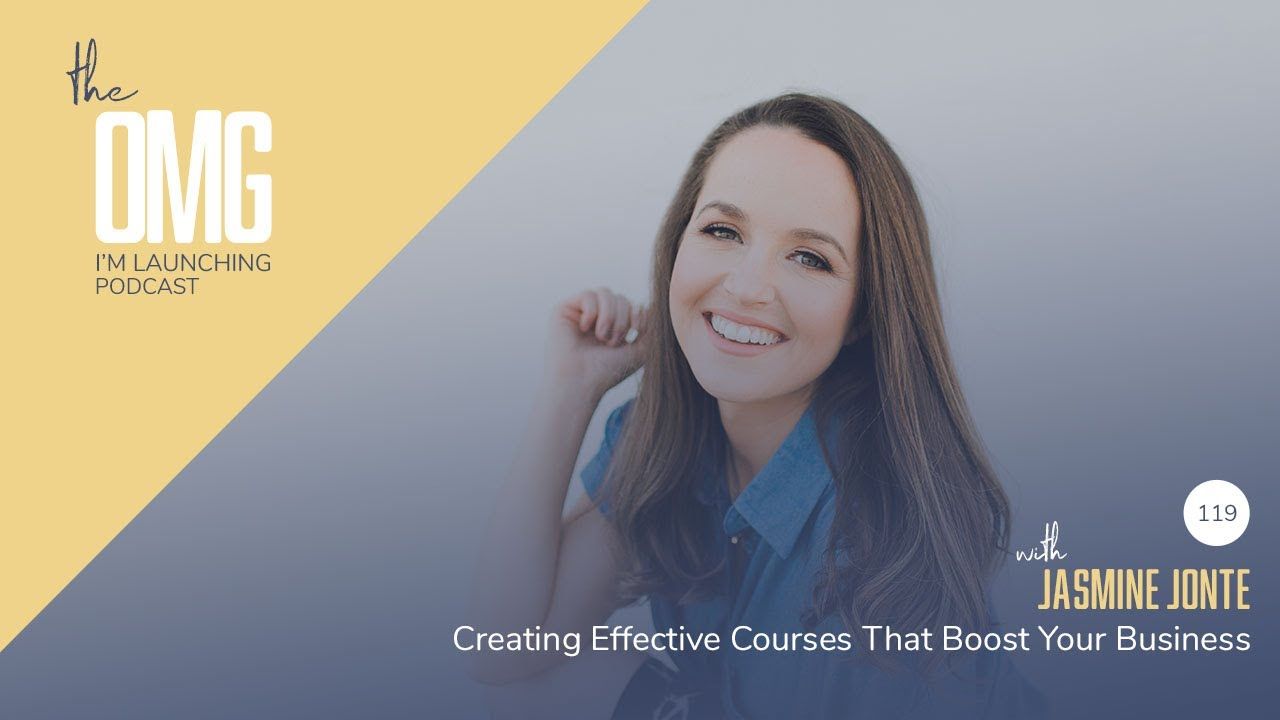
Here's some good news if the idea of being on camera makes your stomach drop: you might not actually need video at all. Jasmine Jonte, founder of Cre8tion, joined Ken Westgaard for a fast-paced, tactical conversation on course creation — and one of the first things she pushed back on was the assumption that video is non-negotiable. Let's get into it. 🎯
Q: Does everyone need to be comfortable on video to build a successful course?
A: No — and Jasmine reframes the question entirely. It's not really about whether you're "cut out" for video; it's about what your specific students actually need to get the transformation.
Her concrete example: an immigration law program helping people abroad secure a specific U.S. visa (the O-1, for "extraordinary" individuals) ended up 95% written content, with almost no video. Why? Because the students taking it were already deeply committed — some even had assistants handling the document-gathering tasks on their behalf. They didn't need to be persuaded or inspired on camera; they needed clear, specific instructions on exactly what to do next. There was still a "why" woven in (explaining why a step mattered enough not to skip), but the format itself didn't require video to deliver real results.
🎯 The reframe that matters here: if your students genuinely need to see you on camera to get their result, the fix isn't avoiding video — it's doing the internal work (Jasmine points to NLP and mindset work specifically) to get comfortable showing up. But if the transformation doesn't actually require it, don't force video just because it's the industry default.
Q: What's a growing alternative to video-based courses right now?
A: Audio-only programs, delivered through a private podcast feed. Jasmine's favorite tool for this is Hello Audio, which she describes as letting you set up a private feed in essentially one click. This format is especially well-suited to creators whose audience is already podcast listeners — students sign up, get access to the private feed, pair it with a workbook, and that's the entire program.
✅ The upside beyond convenience: no filming, no editing, no "did my hair look okay" anxiety before recording. For audio-comfortable audiences, it removes a major production barrier while still delivering a genuinely complete learning experience.
Q: Where should someone actually start when outlining a new course?
A: Not with the content itself — with the offer. Jasmine sees this mistake constantly: clients arrive with a sprawling, unorganized 20-page Google Doc of scattered ideas, sometimes containing what's actually three separate courses tangled together. Jumping straight into content before nailing the offer is a classic rookie mistake.
Building the offer first means answering: what's the core promise? What's your proprietary method — the thing that makes your specific path feel like the only real way to get this result? What's the price, and what bonuses come with it? Every piece of content that follows should trace back to one consistent question: what do I want my students to be able to *do* as a result of this course, this module, this lesson, this specific workbook? Results come from action, so that question — not "what do I know" — should drive every structural decision.
Q: Once the offer is nailed down, how do you actually structure the content?
A: Jasmine's chunking hierarchy: start with the big promised result, break it into the smaller milestone results along the path, then chunk those into modules (roughly one-hour blocks), and break each module further into lessons of five to fifteen minutes.
She walked through a live example using a course-launch topic. If the first real step in launching something is nailing your messaging, that becomes a module — but instead of one long hour-long video, it's broken into short, specific lessons: one on identifying your "vehicle" (the mechanism through which you deliver transformation), one on pain points, one on painting the before-and-after picture for your audience. The goal is bite-sized, almost binge-worthy components that still build toward the same big result.
Q: Is the "step 1, step 2, step 3" linear structure always the right approach?
A: Not always — Jasmine has built plenty of what she calls "choose your own adventure" programs, structured more like a menu than a strict sequence. Her example: a course covering different launch types (challenge launch, webinar launch, beta launch, waitlist launch) doesn't require every student to walk through every single format. Instead, students select the specific path relevant to them and go straight there, rather than being forced through content that doesn't apply to their situation.
She also referenced programs modeled more like an encyclopedia than a traditional course — a large, comprehensive resource library where the student's job is to identify their current specific problem (need a new lead magnet? struggling with messaging? ready to run ads?) and pull exactly what they need in that moment. The tradeoff: this format requires a genuinely self-directed student who can accurately diagnose their own next step — which, Jasmine notes, is exactly why so many people feel overwhelmed by big resource-style courses. Having access to everything isn't the same as knowing where to start.
The Bottom Line
Video isn't a requirement for a course to work — the format should be driven entirely by what your specific students need to actually get their result, whether that's written instructions, audio, video, or some combination. Start every course build with the offer (not the content), chunk everything down into bite-sized, action-oriented pieces, and choose between a linear structure and a "choose your own adventure" format based on how self-directed your students genuinely are.
Not sure whether your course idea needs video, audio, or something else entirely? 🚀 Head to cre8tion.co to figure out what format actually fits your students.
Enjoyed this conversation? Check out more episodes of Business by Design for practical, tactical business-building content.
Join Thousands of Course Creators + Get FREE Weekly Tips in your Inbox
The folks on my list get the goods, by which I mean... insider scoop on the biz, personal life updates, and first chances to join me in new opps. You're in good company. No spam, ever.
We hate SPAM. We will never sell your information, for any reason.
