Mike Barlow: From Solo Consultant to Teaching His Own Process
Oct 03, 2026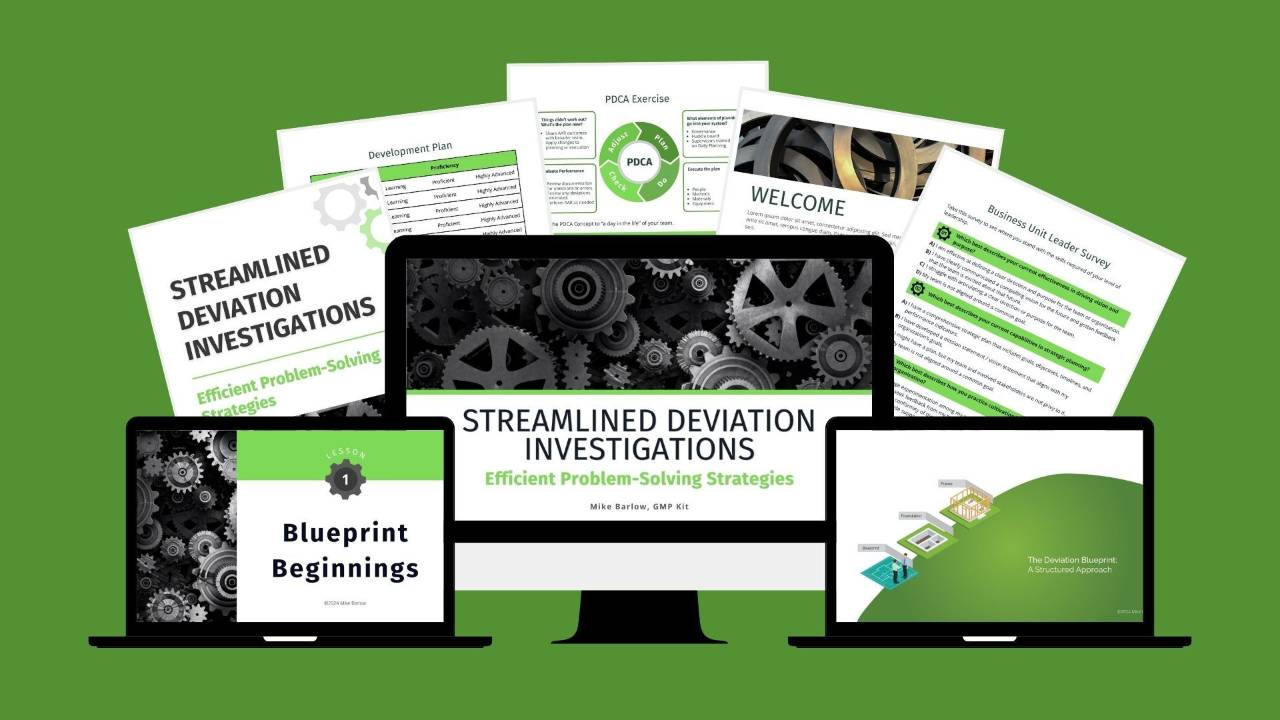
Key Takeaways
- Turned a solo consultant's deep, hard-won expertise into a named, teachable framework.
- Built a complete training program for a highly technical, heavily regulated field — root-cause problem-solving — without sacrificing technical accuracy for simplicity.
- Structured intuitive, years-in-the-making expertise into a five-step process a learner could follow start to finish.
- Delivered the full build — framework, course outline, and branded course portal — as a done-for-you project, so the expert's own time stayed focused on client work.
Client Introduction
Mike Barlow spent years inside pharmaceutical and biotech manufacturing plants as a hired-gun deviation investigator — the person companies call in when something's gone wrong on the production floor and the FDA is on its way. His specialty is untangling exactly the kind of problem that can shut a facility down: a batch record that doesn't match an SOP, a root cause nobody's found yet, an inspection with real stakes attached.
When Mike decided to build his own consulting practice, he wanted a way to teach what he knew. He'd spent over a decade developing an internal process for how to investigate a deviation, write it up, and get it approved fast. The problem was that he was the only one who could do it — he needed a way to share that expertise so other people could learn to do the work themselves.
Before State
When Mike came to CRE8TION, he brought real, IP-worthy expertise — a process he'd refined over a decade of hands-on investigation work. What he didn't yet see was that this expertise could be packaged into something shareable, teachable, and sellable. "I didn't know what you were talking about when you talked about frameworks," Mike said.
He knew how to run an investigation, build a defensible root cause analysis, and get sign-off from an approver — but he didn't have a way to teach it. He was in the middle of building his consulting business, with no time carved out to sit down and turn years of hard-won process into something he could hand to other people.
"I needed something and I had no time to build it," he said. That was the whole ask.
How Do I Turn What's In My Head Into a Framework I Can Actually Teach?
The fastest path is naming the process you already run intuitively. CRE8TION works with the expert to pull their existing method apart step by step, then maps it onto a structure — often a metaphor, like building a house — that turns invisible judgment calls into a sequence any learner can follow and repeat.
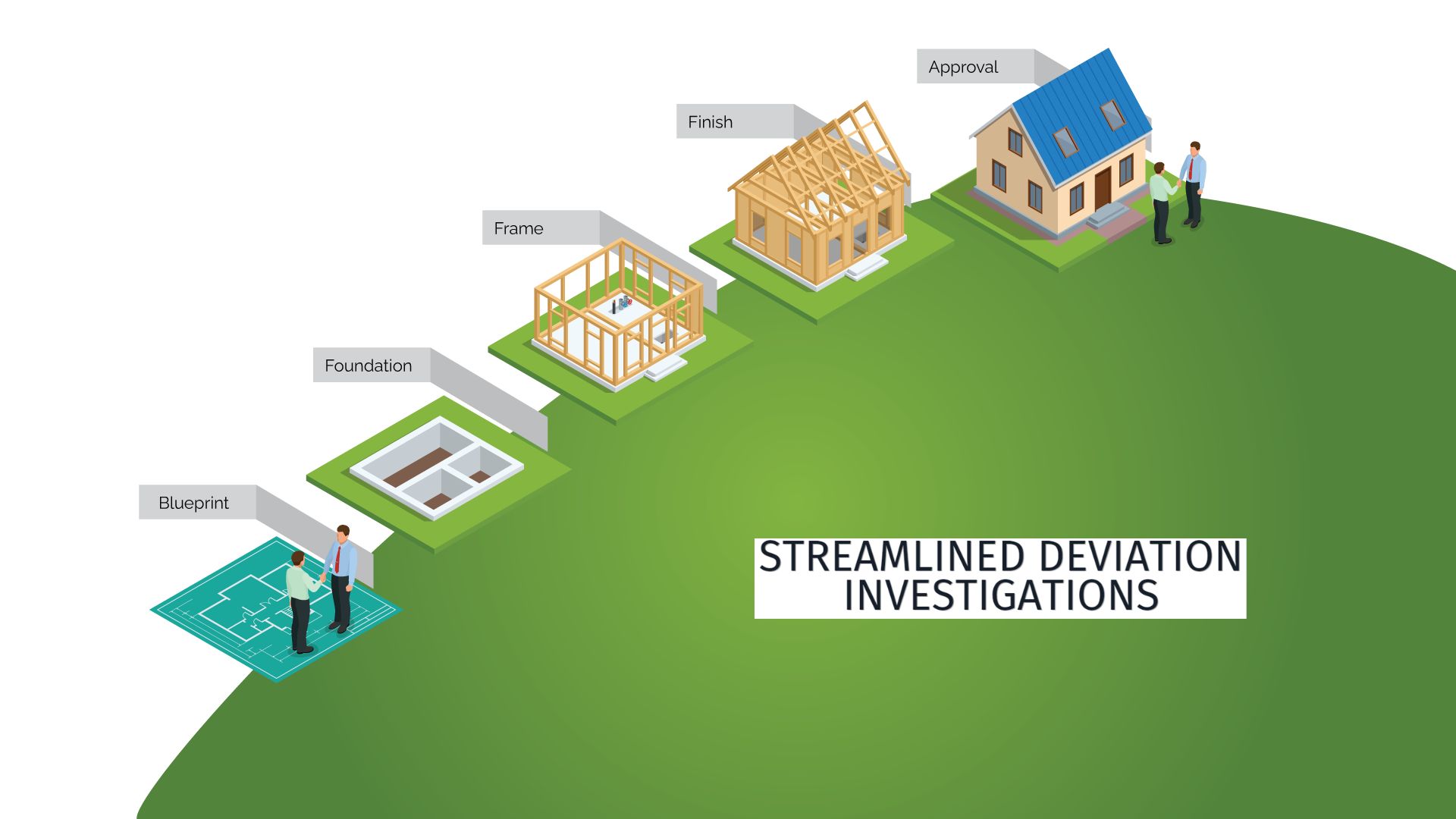
The turning point for Mike wasn't a single a-ha moment so much as watching his own knowledge take shape in front of him for the first time. As the CRE8TION team worked with Mike to pull his process apart lesson by lesson, a structure emerged that had been there all along, just never named: a five-part investigation framework built on a house-building metaphor — you want the plumber to look at the blueprint and tell you it won't work, before the walls go up.
"Once you see it, you can't unsee it," Mike said. "I'm absolutely delighted. I had no idea what a framework was — but now I see them everywhere... You nailed it."
For someone who'd been doing this work intuitively for years, having it named and structured for the first time changed how he saw his own expertise.
CRE8TION's Work
CRE8TION built Streamlined Deviation Investigations, centered on a signature framework — Blueprint → Foundation → Frame → Finish → Approve — mapping the house-building metaphor directly onto the deviation investigation process he already ran in his head:
- Blueprint — define the problem and contain it.
- Foundation — confirm scope before moving forward.
- Frame — build the root cause analysis and corrective action plan.
- Finish — assemble the final report from what's already been built.
- Approve — build reviewer trust that makes sign-off faster over time.
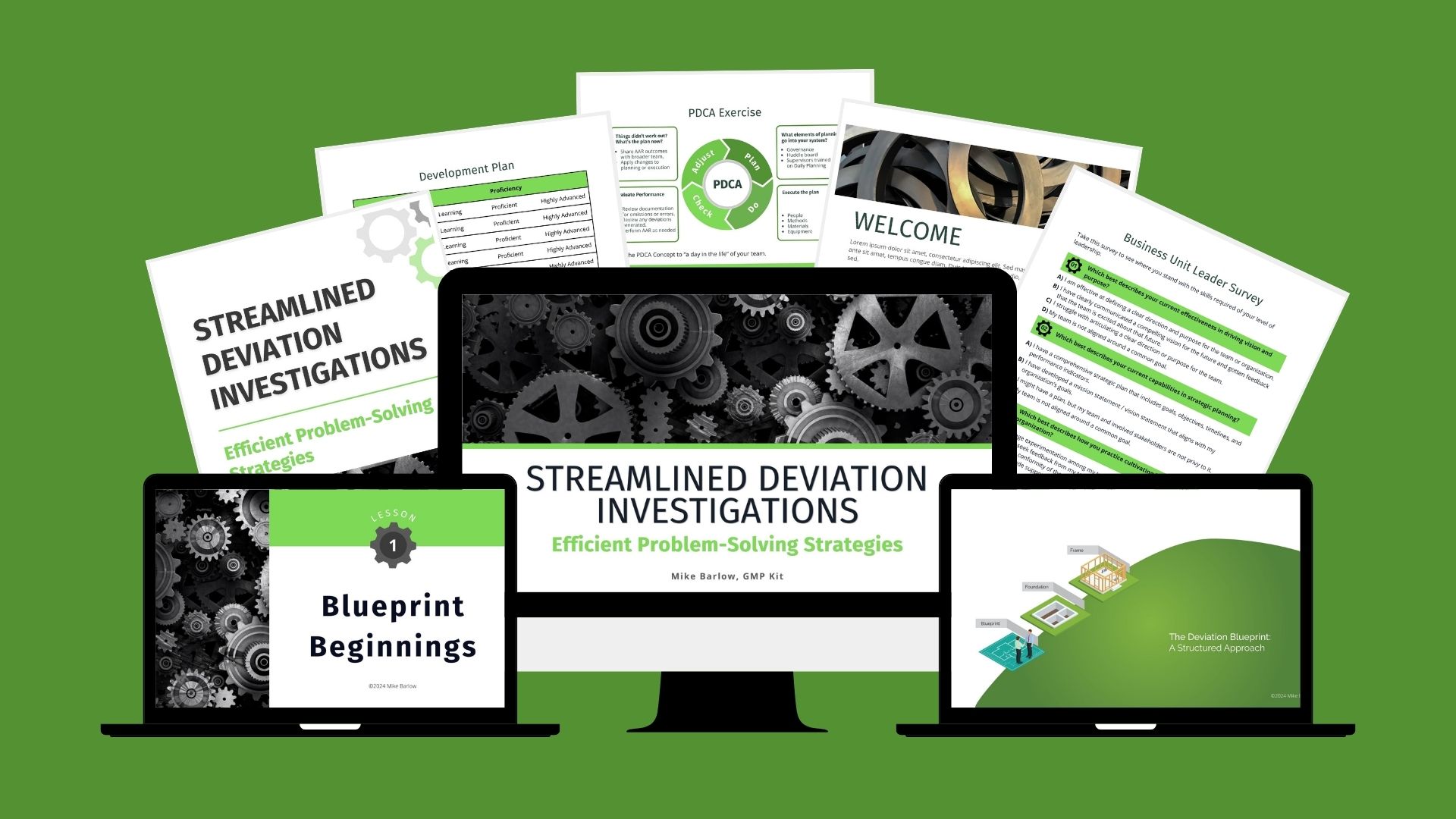
The team turned this into a full course, complete with lesson-by-lesson action steps, deliverables, downloadable references, and a branded Kajabi portal — the entire Streamlined Deviation Investigations curriculum, built and run as a done-for-you project so Mike didn't have to find the time to build any of it himself.
As Mike put it on the team's final call: "I was deep over my head for a long time... [Your Team] had a clear agenda. This is what we're going to do, and just moving along... it truly was like done for you."
After State
By the time the project wrapped, Mike wasn't just teaching a framework — he was using it. "I've used this a lot already," he said. His business partner, going through the training himself, told Mike he could see exactly how each piece fit together as he worked through real deviations.
The identity shift stuck too. "The importance of frameworks is so fundamental now, front and center — at least in my mind, not just in the coursework we developed, but I see them everywhere now," Mike said. What started as "I don't have time to build this" ended as a tool he reaches for constantly in his own consulting work.
Future Momentum
Mike's ambitions for the framework didn't stop at the course. He's now working with a technical co-founder to take the structured version of his process and turn it into software. "All these ideas and lessons learned, you put that into a framework, and that framework is easily convertible to user requirements and specifications, and then you can get to software," he said. "I didn't know that when we started."
He's also planning a case study of his own: running a group of deviation investigators through a before-and-after using the course, to measure the framework's impact in the field where it started.
The trust built on this project didn't stop at one course. Mike brought CRE8TION another piece of his IP tree — a different bottleneck in the same disposition pipeline he'd mapped out on Architect Day, where deviation investigation was just one blocked valve among several. This time the target was further upstream: preventing the deviations before they happen. The result is Right First Time Manufacturing: Concepts & Tactics for GMP Operations Managers, teaching Business Unit Leaders, Functional Area Managers, and Front Line Leaders the systems-thinking skills that keep the whole pipeline moving:
- Systems Thinking
- Goal Setting
- The Habit Loop
- Gamification
- Leadership Culture
- Decision Making
- Governance & KPIs
- Floor Operations
Common Questions
I have years of expertise, but most of it lives in my head — how do I get it out without spending all my time repeating myself to clients?
Start by naming the process you already run intuitively, then work with a team that can pull it apart step by step and turn it into a structured framework. That's usually the fastest path to something teachable.
How do I organize deep technical expertise into a course without losing accuracy?
Map the real, technical process onto a plain structure — a metaphor often works well — so the sequence stays intact, then build lesson-by-lesson action steps around it. Technical accuracy and simplicity aren't in conflict when the underlying framework is right.
How do I organize my expertise so it's not just one giant flat list of everything I know?
At CRE8TION, we organize information using frameworks. A framework takes your knowledge and chunks it up into higher-level concepts, while also chunking it down into smaller, more granular ones. That's not only the best way for learners to actually absorb the information — it also packages your expertise as a product, which makes the promise easy to understand on a sales page.
Join Thousands of Course Creators + Get FREE Weekly Tips in your Inbox
The folks on my list get the goods, by which I mean... insider scoop on the biz, personal life updates, and first chances to join me in new opps. You're in good company. No spam, ever.
We hate SPAM. We will never sell your information, for any reason.
