Rebuilding a University-Licensed Entrepreneurship Course Around the Moment Students Were Dropping Off
Sep 17, 2026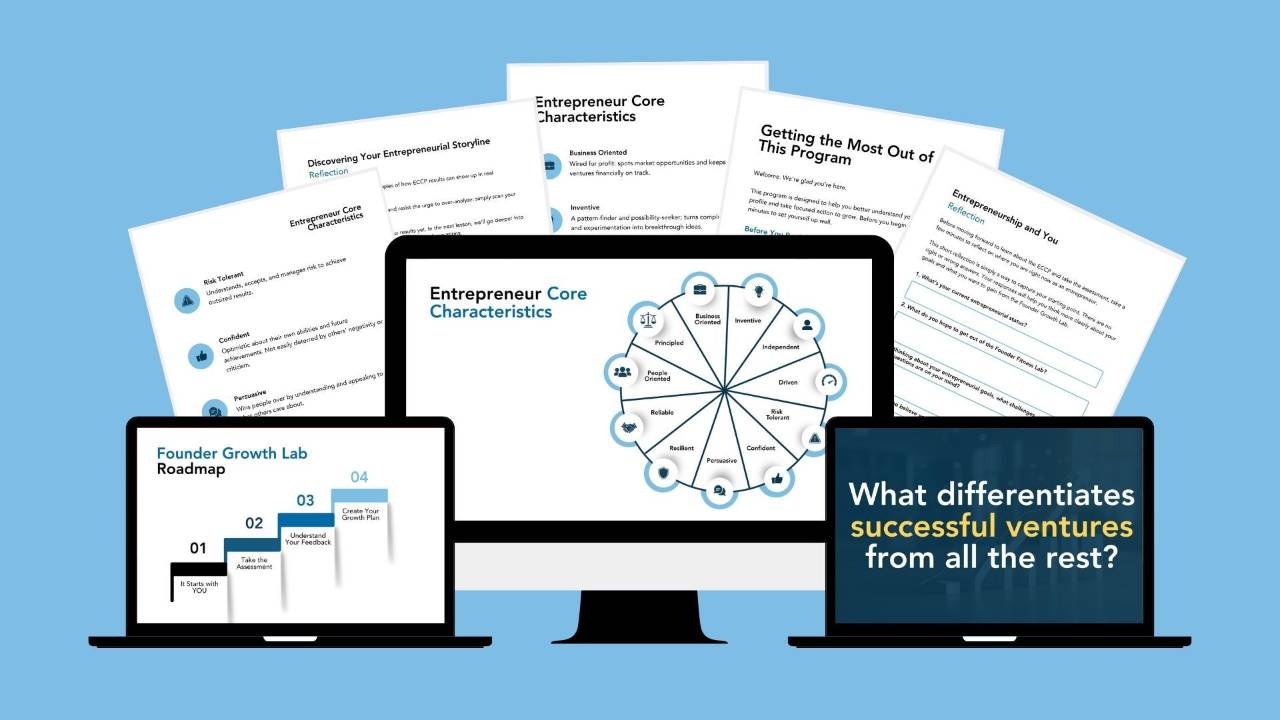
Key Takeaways
- Stayed a true thought partner through a course revamp that changed direction more than once, adjusting the plan as new information and options surfaced rather than executing a fixed spec.
- Investigated emerging AI technology alongside the client throughout the engagement, so the tools built wouldn't be outdated within months of launch.
- Turned a one-time psychometric assessment into an interactive card-sorting game that makes the results personal, actionable, and worth revisiting.
- Replaced a static, low-UI resource library with a clickable, framework-rooted interface so learners always know where to go next.
- Treated "which AI tools to add" as a curriculum-and-platform question, not a novelty question — matching tooling to what the course actually needed and what the portal could support.
Client Introduction
John "Buck" Bradberry and Dawn Ballenger, through their company EP Labs, built Founder Growth Lab, an entrepreneurial-readiness course centered on a psychometric assessment — the ECCP — that helps students and aspiring founders understand their own entrepreneurial characteristics. The course isn't just a consumer offering: it's licensed into academic settings, with students from programs like UNC's entrepreneurship track and ASU-connected founder networks taking it, and international interest from cohorts as far as Kigali, Rwanda. That academic use case comes with its own bar to clear — completion matters differently when a university is assigning the work, and the assessment at the center of the course is a real psychological instrument, not just a quiz.
Before State
The course had one persistent problem: learners were completing the ECCP assessment roughly halfway through the program, then dropping off before finishing the rest of the material — the part of the course actually built to help them act on what the assessment revealed.
It wasn't a case of the course being built without the learner in mind — Buck and Dawn had designed it with real care, and the content itself, as Dawn put it, "works pretty well." But the data told a more specific story than intuition alone could. Student feedback and completion patterns pointed to exactly where the experience broke down: engagement fell off hard right after the assessment, the development-plan module was consistently the point of greatest confusion, and structural choices that made sense on paper weren't holding up end to end.
Breakthrough Moment
The engagement started with a full Program Audit — a structured review of the course's framework clarity, instructional design, interactivity, and actual student and faculty feedback data. That audit turned a general sense of "something's off after the assessment" into specific findings and a working plan.
The turning point wasn't one decision made in a single meeting — it was the thought partnership itself, and what it uncovered along the way.
At Architect Day, the plan looked straightforward: move the ECCP earlier in the sequence to address the drop-off, and layer in AI tools to make the back half of the course more engaging and actionable. That was the working plan going into the build.
That thought partnership carried through the entire engagement, not just that one call, and it's what changed what actually got built. As the two teams kept working together, something surfaced that nobody had set out to learn: the ECCP's placement wasn't actually the main lever. It was the experience surrounding the assessment — what happened before and after it — that mattered more than exactly where it sat in the sequence. Once that became clear, the energy that would have gone into relitigating the assessment's position went into building out that surrounding experience instead.
The AI tooling followed a similar arc. CRE8TION had been researching AI platforms throughout the engagement, evaluating what would fit the curriculum. Rather than locking in a choice early and building toward it regardless, the approach stayed responsive — continuing to adjust as the team learned more about what would actually serve the learners, which is how the work landed on two purpose-built AI tools rather than a single off-the-shelf assistant bolted on early.
Neither of these was a single "aha" moment — they were things that only became visible because CRE8TION was embedded as a thought partner for the whole ride, not executing a fixed spec from day one.
How Do I Increase Completion Rates in My Program?
Low completion doesn't automatically mean the curriculum is broken. Before rebuilding anything, look at where engagement is actually concentrated — not just the sequence or which moments are the most fun — because a drop-off is more often a sign that a specific stretch of the experience needs support than a signal to throw out the core curriculum. Most course creators have real options short of a full rewrite.
The module arc — welcome and context, the four universal factors of success, the ECCP, understanding results, the "one thing" game plan, and follow-through — saw only modest adjustment, since the process made clear that sequence wasn't the core problem. The real work went into building out the experience around that arc.
Staying responsive through the engagement — rather than locking in a choice early and building toward it regardless — is what led to two purpose-built AI tools instead of one generic assistant grafted onto the course:
- A card-sorting game built on the ECCP scores — learners sort their own results twice: first sorting their actual scores into buckets (high, moderate, low), then sorting again based on how each characteristic actually shows up in their life — whether it's genuinely holding them back or not that big of a deal. An assessment score alone doesn't always account for real-life context, so that second round turns an objective result into something personal. It's a game, so it's fun and engaging, but the real value is that it makes the results feel like theirs rather than just a number on a report.
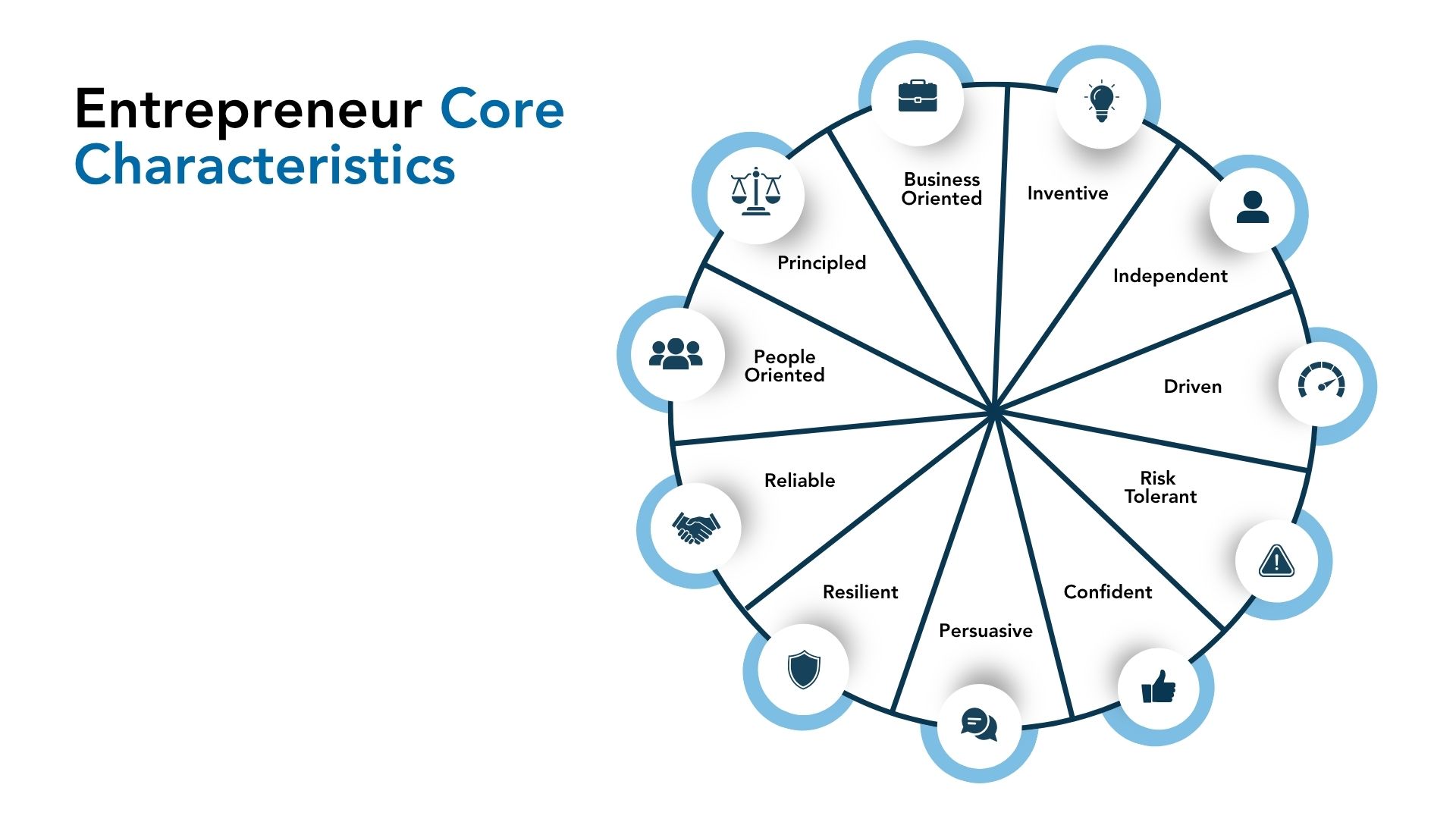
- An interactive framework interface tied to the resource libraries — the 11-characteristics framework (shown above) went from a static graphic to a clickable dashboard: learners click into whichever characteristic they want to explore and land directly in that characteristic's resource library. What used to be a fairly plain collection of video overviews with very little intentional UI became a recognizable, on-brand interface rooted in the course's own framework.
Real-life entrepreneur stories, a learner-journey roadmap visual, and re-engagement touchpoints (emails, a LinkedIn accountability badge, a facilitator-facing guide) were layered onto that same spine, all in service of keeping learners moving forward instead of stalling out after the assessment.
After State
What had been a good course with a structural gap became a course built around an actual learner journey — one where the moment that used to cause the drop-off (the assessment) is now followed by a game that turns objective scores into a personal, actionable read on what's really worth working on, plus an interactive, on-brand way to access the resources for it, instead of a static report and a plain video library.
Buck and Dawn described the process itself, not just the outcome, as a genuine thought partnership. Asked how likely they'd be to recommend CRE8TION, Buck rated it a 9 or 10, citing the team's "can-do-ness" and flexibility. Dawn was more specific about what that meant in practice: "We appreciate your flexibility and your ability to be a thought partner with us instead of just, this is how we do it, and plug into our system, and let's go."
Future Momentum
With the course now built around a card-sorting game that makes the ECCP results personal and an interactive, framework-rooted interface into the resource libraries, the course is positioned to keep expanding into the academic settings it already serves — new university cohorts, international interest like the Kigali group, and continued licensing to schools that want a tailored version of the program. The willingness to stay responsive and flex the plan when something clearer emerged — on the ECCP's placement, and on what the AI tooling should actually be — isn't a one-time fix; it's a durable way of working Buck and Dawn can keep applying as the course keeps evolving.
Ready to bring this kind of thought partnership to your own course? Work with CRE8TION.
Common Questions
What are my options when it comes to adding AI experiences to my course?
It largely depends on your curriculum, the experience you're trying to create, and what your learners actually need to take action — not just adding AI as a shiny, fun extra. A lot of it also comes down to what your course platform can actually support, which is where having a thought partner who's constantly tracking the latest technology makes the difference.
Why do students stop finishing a course right after a big milestone like an assessment?
It's rarely the milestone itself. Usually it's what comes right after that's missing — if there's nothing engaging or actionable waiting on the other side, momentum drops even when the content itself is strong.
How do I know if my course needs a full rebuild or just a few fixes?
Most programs don't need to start over. A structured audit usually turns up a handful of high-leverage changes rather than a wholesale rebuild.
Join Thousands of Course Creators + Get FREE Weekly Tips in your Inbox
The folks on my list get the goods, by which I mean... insider scoop on the biz, personal life updates, and first chances to join me in new opps. You're in good company. No spam, ever.
We hate SPAM. We will never sell your information, for any reason.
