How to Create the Go-To Course in Your Niche
Feb 20, 2026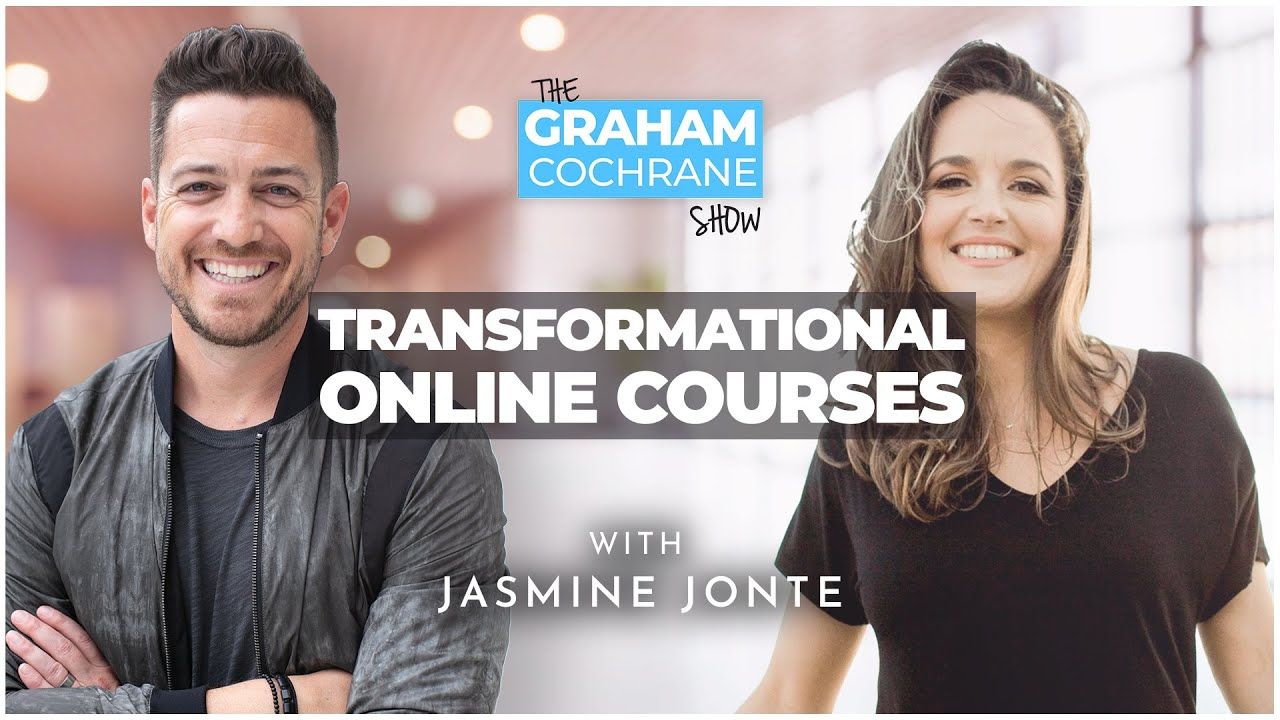
Here's an uncomfortable truth: being an expert doesn't automatically make you a good teacher — and sometimes, trying to teach without knowing how can do more harm than good. 😬
That's exactly the kind of honest, no-fluff insight Jasmine Jonte, founder of Cre8tion, dropped during her conversation with Graham Cochrane on The Graham Cochrane Show. As a former teacher turned course-creation strategist, Jasmine has spent years helping experts distill everything in their heads into programs that people actually finish — and get results from.
We turned the highlights into a Q&A. Let's get into it. 🎯
Q: What's the biggest misconception experts have about building a course?
A: That expertise equals teaching ability. Jasmine is blunt about this: "It's actually dangerous for creators to think that they're educators a lot of the time."
She's bought programs where it's obvious the expert simply went for a walk, recorded themselves talking, and had a virtual assistant dub some slides on top afterward. The expert clearly knew their subject — but knowing something deeply and being able to package it so someone else can learn it independently are two completely different skills.
Her question worth sitting with: if you don't know how to teach, are you actually saving your students time — or just making things muddier?
Q: How do you take "100 files in your brain" and turn them into an actual course?
A: This might be the single most useful mental model in the whole conversation. Jasmine describes an expert's knowledge as roughly 100 files — and her job is helping them figure out which 10 files actually belong in the course, and in what order.
The starting point is niche and offer alignment. Her example: "dog walking course" is broad and unwieldy. "How to walk your large dog in a suburban area" is specific — and that specificity naturally narrows down which of those 100 files actually matter.
From there, it comes back to a familiar rule: would 80 out of 100 students need this specific piece of content? If yes, it belongs in the core program. If it only applies to a smaller slice, that's what Q&A calls, support chats, and community are for — not the main curriculum.
💡 Quick gut-check: If your course tried to include everything you know, it wouldn't be good for the end user. Constraint is a feature, not a limitation.
Q: How do you actually structure a course framework without it feeling forced?
A: Jasmine's advice here pushes back on a common assumption: you don't need a rigid, linear "Step 1, Step 2, Step 3" framework.
Some transformations really do work that way. But plenty of programs — especially in business — work better as a cumulative or cyclical framework, since business itself doesn't really have a finish line; it's ongoing growth and iteration. The goal is simply to map out, visually, what the actual steps to transformation look like for your specific audience — even literally sketching it on paper first.
Once you have that framework, everything else is just chunking:
- Big framework → broken into modules
- Modules → broken into lessons (typically 7–10 minutes of content)
- Each lesson → paired with a specific action step and deliverable (a workbook, a private podcast feed, whatever fits)
✅ The payoff: when you do this chunking work up front, actually building the course becomes far less overwhelming — sometimes even genuinely fun.
Q: Is there an ideal video length for course lessons?
A: It depends entirely on your audience — and Jasmine's examples make that point vividly. She's seen Gen Z-focused programs built as physical workbooks with QR codes linking out to TikTok videos. She's also currently building 30-minute video lessons — shipped on DVD — for a program teaching people in their 60s how to invest in tax liens.
🎯 The real lesson here isn't a number. It's that video length is a niche-and-offer-alignment question, not a universal best practice. Know your audience's actual consumption habits before you decide on format.
Q: What actually keeps students moving through a course instead of stalling out?
A: Two big levers came up in this conversation: learning-style flexibility and staying top of mind after purchase.
Respect different learning styles
Jasmine shared a candid example: she bought a course with a 0% video completion rate for her personally — she never watched a single lesson. But she still got massive value from it, because the creator also included strong workbooks and templates she could scan and execute from directly. She's a "read the PDF, don't make me watch you talk" learner, and she 2x's everything she does watch.
Her takeaway: the more control you give students over how they consume your content, the more likely they are to actually finish it. At minimum, that might mean video + transcript + a downloadable workbook.
Use a private podcast feed
This is one of the sharper, more practical tips from the episode. Instead of relying on students to log back into your course platform (which, let's be honest, nobody loves doing from their phone), you can push your course audio into a private podcast feed using a tool like Hello Audio. Students subscribe once, and then your content shows up right alongside the other podcasts they already listen to daily — on a dog walk, during a commute, wherever.
🚀 Bonus move: pair this with simple retargeting ads to your own buyers — "Module 1 just dropped!" — since they're already scrolling Instagram and you already have their contact info. It's a subtle but powerful way to keep momentum going after the sale.
Q: Is there a pattern behind which course creators actually succeed?
A: Yes — and it comes back to something Jasmine has said in nearly every interview: at least 10 clients worked with one-on-one (or 10 businesses consulted with) before productizing.
She's built exactly two programs for clients who skipped this step, and both needed a full redo within about 18 months. Even with deep subject-matter expertise, there's no substitute for the pattern recognition that comes from actually teaching real people first — it's how you learn where the roadblocks are, and often even the exact language your future students will use to describe their own problems.
Bonus benefit: those 1:1 conversations essentially become free market research and copywriting — the words your clients use to describe their pain points become the words you use to sell (and teach) the course later.
Q: What's a real example of this working well?
A: Jasmine pointed to Nick Bradley — an acquisition entrepreneur who built an audience organically on Clubhouse during its early buzz, with people constantly asking how to work with him despite having no actual product yet. Cre8tion helped him build a program teaching business owners how to exit their companies for the best possible price — a genuinely difficult, nuanced topic to teach.
The result: six figures in the first launch, roughly 100 students over time, and a ripple effect well beyond the direct students — some have gone on to use the training to acquire and bolt on other businesses to increase their own company's valuation.
Q: Where is course creation headed, especially with AI in the mix?
A: Jasmine sees two clear trends:
- Higher-touch support becomes non-negotiable. As more low-quality, unsupported courses flood the market, students increasingly expect access to coaches, community, or some form of real support — not just a video library and a paywall.
- AI becomes a creative partner, not a replacement. Jasmine's framing here is worth remembering: even as AI helps generate outlines, copy, or content faster, people still join programs because of the energy and trust they feel from a specific person. AI can speed up the how; it can't replace the why someone chooses to learn from you
The Bottom Line
You don't need everything in your brain to build a great course — you need the right 10% of it, structured around real transformation, delivered in formats your specific audience will actually consume, with enough support to keep them moving. Teaching is a skill separate from expertise, and it's one worth taking seriously if you want students who finish (and rave about) what you built.
Want the exact framework for making your course as addictive as your favorite show? 🍿 Grab Jasmine's free guide, How to Make Your Course Binge-Worthy as Netflix, or head to cre8tion.co to talk through your own course strategy.
If this episode gave you a few "oh no, that's me" moments, you're in good company — subscribe for more real, practical conversations on building a business that actually works.
Join Thousands of Course Creators + Get FREE Weekly Tips in your Inbox
The folks on my list get the goods, by which I mean... insider scoop on the biz, personal life updates, and first chances to join me in new opps. You're in good company. No spam, ever.
We hate SPAM. We will never sell your information, for any reason.
