How to Engage Your Online Course Students
Feb 15, 2026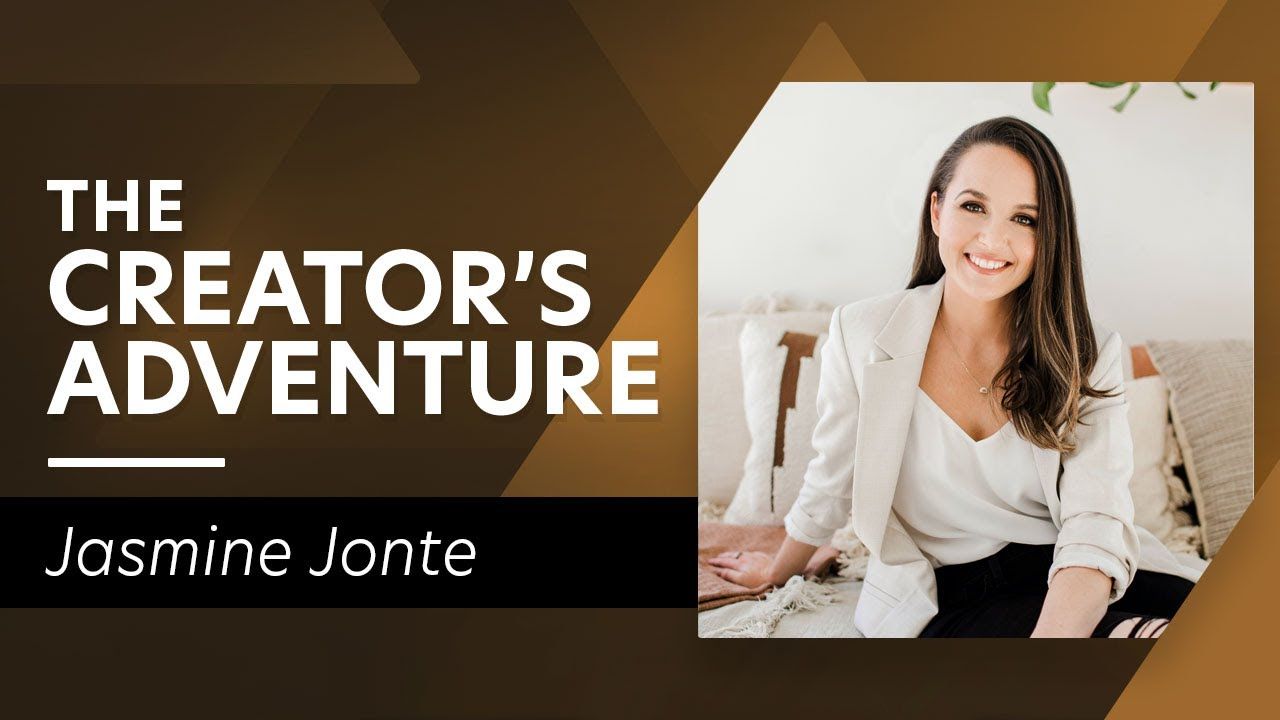
Here's an unpopular opinion, straight from Jasmine Jonte: course completion rate is not the success metric most creators think it is. 🎯
Jasmine, founder of Cre8tion, joined Bryan McAnulty on The Creators Adventure to dig into what actually keeps students engaged — and it's not always what you'd assume. Let's break it down, Q&A style.
Q: Isn't a high course completion rate the whole point?
A: Not necessarily — and Jasmine has a genuinely disarming example to prove it. She bought an email marketing mini-course recently and never watched a single video. Her completion rate for that course would technically be zero. But she pulled out the resources and templates, applied them directly, and got exactly the result she was looking for.
"If you look at that number, Jasmine is a terrible student who hated your stuff." But she didn't — she just didn't need the full video content to get her result.
Her actual recommendation: look at what students genuinely need to complete in order to get results — not what percentage of total content they consumed. For some programs, that's the first half of the course (she cited a health/weight-loss program where the first four modules were essential and the back half was more "what if" supplemental content). For others, it might be a single workbook. It depends entirely on the program.
✅ Better indicators of real success: testimonials, Net Promoter Score, and — critically — repurchases and referrals. Those tell you whether students actually got value, regardless of how much of the content they technically watched.
⚠️ One caveat worth flagging: if literally nobody is opening your course at all, that's not a completion-rate nuance — that's an onboarding problem, and it needs to be addressed directly.
Q: How do you actually structure content to keep students engaged?
A: Start with the end in mind — the same way you'd plan a launch or sales funnel. Jasmine's process for building any individual lesson (typically 5-15 minutes) starts with one question: what's the action step?
Her reasoning: results don't come from watching a video. They come from a student actually filling out the spreadsheet, posting the thing, or taking the specific action the lesson points to. So the video itself gets built backward from that action step, not the other way around.
Her structural hierarchy: program → modules → lessons. Modules are the bigger stepping-stone chunks toward the transformation; lessons are the tight, 5-15 minute pieces inside them. Each lesson should end the same way: reiterate the action step, then open a loop into what's coming next — essentially a cliffhanger that keeps students wanting to return.
Q: Do all lessons need to be video?
A: No — and this is a common misconception Jasmine pushes back on directly. Plenty of effective lessons are written content paired with a workbook, with no video at all. The goal isn't to hit a specific content format — it's to meet different types of learners where they are, which video alone doesn't always accomplish.
Q: You've built courses with live components. How do you avoid marathon hour-long recordings?
A: Jasmine calls this the "studio audience method" — modeled after game shows like The Price Is Right, which teach in tight segments and cut to commercial rather than running one long, unbroken block.
In practice: film a live session with your group, but structure it as multiple 10-15 minute segments with breaks (and Q&A) in between — cutting the recording at each break. Each individual segment becomes its own standalone lesson in the portal. This solves two problems at once: it keeps the actual uploaded lessons short and digestible, and it gives presenters real audience energy and feedback while filming — something many experts genuinely struggle without when recording solo to a blank screen.
Q: What's the biggest misconception about gamification?
A: That it's about points and prizes. Jasmine's counter: what people actually want most is status.
Rather than defaulting to swag or point systems, her recommendation is to identify the specific milestones and behaviors you want students to hit consistently, then find ways to give them visible recognition for reaching them — a leaderboard placement, a special name or badge inside the community, public praise on a quarterly "award ceremony" style post.
Second most powerful lever after status: access. Unlocking a private call with the expert, or a members-only training, after hitting a specific milestone gives students something genuinely more valuable than a physical prize — more of you.
Q: What are the most common mistakes you see course creators make?
A: Three recurring patterns:
- Trying to put everything they know into the program. Content should be the minimum needed to get the specific result — not a comprehensive brain dump.
- Missing action steps at the end of lessons, leaving students unclear on exactly what to do next.
- Only designing for one type of learner. Visual learners (roughly 65% of the population, by Jasmine's estimate) are usually well-served by video and slides. But auditory learners benefit enormously from having course content turned into a private podcast feed — Jasmine notes this alone can dramatically increase engagement, since people will listen on repeat during commutes or chores, reinforcing retention through repetition even if they're not actively "taking action" in the moment. Kinesthetic learners need something tangible to physically interact with — a branded workbook or manual they can take notes in as they go, rather than a blank sheet of paper.
💡 Bonus tip: combining formats compounds retention. Jasmine personally listens to audiobooks while reading along and taking notes — and finds she retains dramatically more that way than with a single format alone.
Q: What trends are shaping the future of online courses?
A: Two stood out in this conversation:
Micro-niches
As more people enter the course space, standing out requires getting hyper-specific. Established names with major reach (think Tony Robbins-level brand presence) can sell a broad productivity course purely on audience size. Everyone else needs to go narrow — Jasmine's example: not "a productivity course," but something like "how moms of toddlers get more done in a three-hour nap window using a specific proprietary method."
Community, evolving beyond Facebook groups
Jasmine sees real momentum moving away from passive Facebook groups and toward more intentional community structures — Circle, Voxer groups, Slack channels, or Instagram DM groups, depending on what actually fits the audience. She also sees live events returning with real force, along with local meetups for communities with a geographic footprint.
🎯 A useful nuance on forum vs. real-time community formats: whether a searchable forum (where students can reference past conversations) or a more immediate, chat-style community (Slack, Discord) works better depends on the program itself. Highly technical, process-driven programs tend to benefit more from searchable forums; relationship- or networking-driven programs (like a podcasting community, where students actively find guests through each other) benefit more from real-time interaction. Either way, valuable recurring questions can be pulled out and repackaged into a resource or FAQ section so that knowledge doesn't get lost in a fast-moving feed.
The Bottom Line
Course completion rate is a far less reliable success signal than most creators assume — what actually matters is whether students get the specific result they came for, however much (or little) content that requires. Build every lesson backward from a clear action step, design for multiple learning styles, and use status and access — not points and prizes — to keep students genuinely engaged.
Curious how a done-for-you course build could apply real instructional design to your expertise? 🚀 Head to cre8tion.co or find Jasmine on Instagram and Facebook.
Enjoyed this conversation? Subscribe to The Creators Adventure for more real stories from creators building online businesses.
Join Thousands of Course Creators + Get FREE Weekly Tips in your Inbox
The folks on my list get the goods, by which I mean... insider scoop on the biz, personal life updates, and first chances to join me in new opps. You're in good company. No spam, ever.
We hate SPAM. We will never sell your information, for any reason.
