Online Courses Aren't Dead: How to Create a Course People Actually Finish
Oct 12, 2026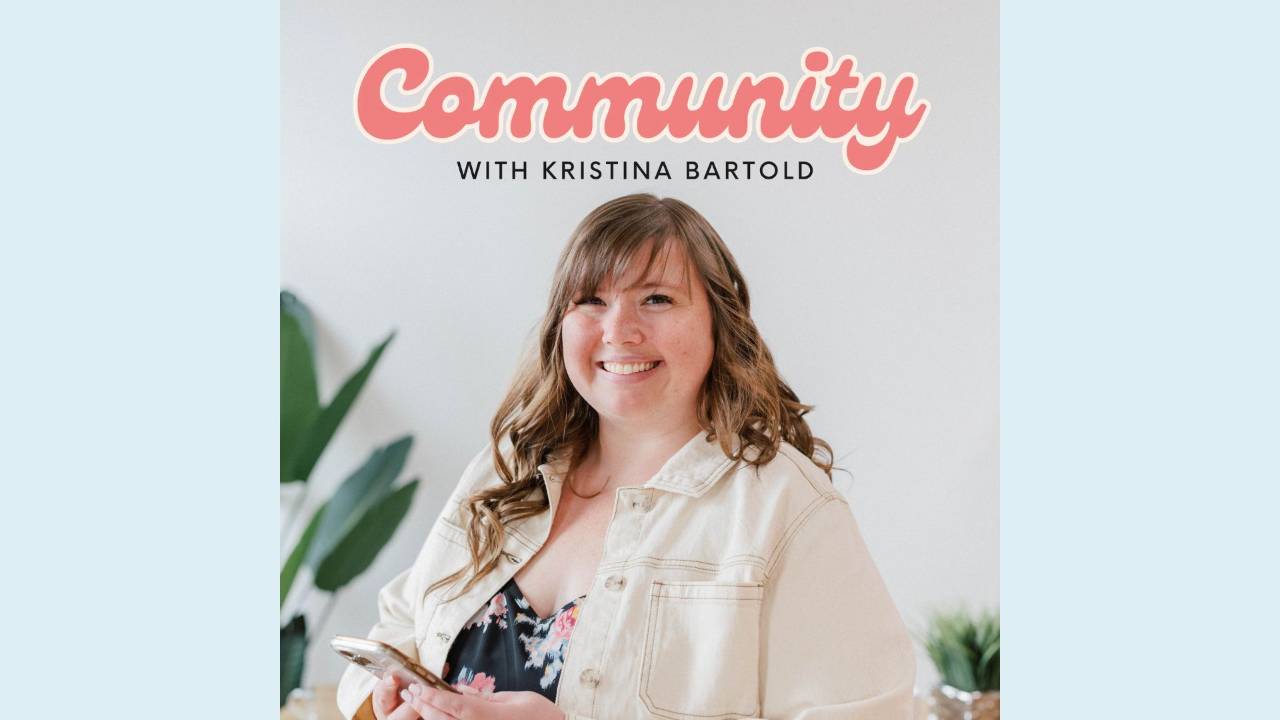
Every few months, someone online declares that courses are dead. Jasmine Jonte, founder and CEO of Cre8tion, has a different take: info-dump courses were never valuable, and now everyone can see it. 🎯
She joined Kristina Bartold on The Social Snippet podcast, a show all about building community, to dig into why online programs are still wildly lucrative when they're designed well. They cover the AI "slop" problem, the passive income myth, and the exact touchpoints behind a program with a 95% certification rate. Here's the conversation.
Q: How did a first-grade teacher end up building online programs for other experts?
A: Jasmine taught kindergarten and first grade for four years in Detroit, in what was then the lowest-performing school in the country. Her students grew a year and a half's worth of learning in a single year, which taught her how to make learning fun and get results from kids who arrived at wildly different levels.
Then she burned out. Teaching meant 80-hour weeks and three jobs just to make ends meet, so she moved online and built her own accountability coaching programs and masterminds. The numbers were strong:
- 75% completion rates
- About 80% retention in her community, with people staying from mastermind to mastermind
She assumed that was normal. 😅 It wasn't.
she couldn't crack was marketing and sales. She paid $7,500 for a program from a multi-award-winning marketer, and it was terrible. He sold to her brilliantly, because she's a discerning buyer, but he couldn't teach what he knew. That was the lightbulb: if there's anything Jasmine knows, it's how to get people results inside a program. Cre8tion has since built 170+ programs and 2,000+ lessons for 100,000+ students, generating multiple millions in revenue for clients.
Q: Does being great at your craft mean you can teach it?
A: Not automatically. Kristina pointed out that the same thing happens in marketing: you can be wildly successful at what you do and still not know how to teach it, or what would make it stick for someone else.
Jasmine's take is refreshingly fair. There are a few ways to learn how to teach what you know:
- Trial and error. Run webinars, get in front of people, see what works and what doesn't. Nothing wrong with that route.
- Hire the skill. Learning experience designers, instructional designers, and learning strategists (hi, her team 👋) have already done the work, so you don't have to.
💡 Your move: decide which path fits your season of business. Just don't pretend the skill is optional.
Q: What's the biggest fail you see in online courses?
A: Eighteen months ago, Jasmine would have said it's not making content actionable enough.
Experts assume that because something helped one student one time, everyone needs it, and they pour everything they know into an info-dump course. That was never valuable, and in a world where we're all swimming in content, it's more obvious than ever.
That's still true. But today she'd add a second fail: not leveraging AI to make the course actionable.
What does "AI-powered actionable" actually look like?
Workbooks, she says, are on their way out. Picture an interactive dashboard inside the student's portal where they fill things out in real time, then click print or save and they're done. No separate homework, no PDF to dig up later. Same content, completely different experience and feeling.
🚀 The honest timeline: you can get away without it right now (the conversation was recorded in fall 2026), but a year from now, Jasmine says, you'll kick yourself. She admits that's a little hyperbolic depending on your niche, since different audiences sit at different points on the curve, but the direction is clear.
Q: Where's the line between using AI well and overusing it?
A: This one hit close to home. A few weeks before the recording, Cre8tion's learning experience designers came to Jasmine with a problem: clients were running lessons through AI and sending back what the team described as slop, then asking why the final product didn't look like that.
The reason is simple: clients don't know what "good" is. That's why they hired the team.
You can absolutely ask Claude, ChatGPT, or Gemini to write a 10-minute lesson. But it will draw on everything else on the internet, including all those courses with a 3% completion rate. You'll get the average back.
Jasmine shared a real example. At a mastermind, someone said Claude built his whole course, video included, and when asked if he'd QA'd it, he shrugged: it's just a free lead magnet to get people into his funnel. Maybe that was the right call for his business, she said. But for most of the experts she works with, reputation matters more than speed.
🎯 The rule of thumb
If someone has paid you money they worked hard for to get a transformation, show some respect for that. Don't hand them whatever AI pulled from who-knows-where.
Kristina added the trust angle: buyers are far more critical than they were in the Facebook Live shake-slinging days. If your lead magnet reads like it was written entirely by AI, people will assume coaching with you feels the same.
Q: Is it true that courses equal passive income?
A: Jasmine has been "shouting from the rooftops" about this one since the beginning: no.
Passive income exists, she says, if your money is sitting in a Vanguard account growing with the market. A self-paced evergreen program is different, because to make income you need leads, and to turn leads into sales you need a system. Even the most basic version (ads → webinar → buyers) has people working behind the scenes:
- Someone is writing ad copy, building creative, and turning ads on and off
- Someone is tracking webinar show-up rate, watch time, buy rate, and which follow-up emails convert
- Someone is nurturing everyone who didn't buy, through evergreen sequences, organic content, and retargeting ads
It might feel set-and-forget for a few weeks. Then Facebook changes something, or the world shifts, and it stops working. Maybe you hire people to do all of that, but somebody is doing it.
There's active work somewhere.
Kristina laughed that a former client once told her running her agency must be "passive." It isn't. 🙃 Her take: people understandably want an easy out of the work, and courses took the brunt of that fantasy.
⚠️ Jasmine's gentle warning: be careful buying from marketers who are really good at marketing "passive income." You may not be doing the activity that generates it.
Q: So if courses aren't passive, should you build in live touchpoints?
A: Jasmine's answer comes from watching the market flip. For years, when Cre8tion was known for done-for-you course creation, people came in believing the passive income promise. She had to be the "bad guy" on sales calls and explain that they'd need to become, or hire, digital marketers.
Now the pendulum has swung the other way, and people say they don't want a course at all. But here's the part most people miss: it's extremely rare that Cre8tion has built a program with no touchpoint from the expert. Behind the scenes, Jasmine has always asked clients how they'll show up: Is there a community? Calls? A facilitated experience?
And if you want transformation and lifetime value, she says, integrating a live experience is one of the best ways to get both. Kristina agreed: people buy from people. She shared that when she buys programs, she wants some kind of touchpoint, even if it isn't one-on-one, so she doesn't feel like she just bought something and left it sitting there.
Q: What touchpoints actually work? Can you give us the full-blown example?
A: Yes: Biddy Tarot's tarot coaching certification program, the first launch of which Cre8tion supported last year. It was built for tarot readers who already know how to help someone through a reading but want to upskill into transformational coaching. The result: a 95% certification rate.
Here's what was inside the container:
The curriculum (aka the course)
This is why Jasmine says courses aren't dead: if you want leverage and you have to teach what you know in any way, shape, or form, that's just a curriculum. It's mostly videos with resources, and you can AI-ify it as much as you want. Biddy Tarot also has an AI companion.
The support structure
- One monthly call with Bridget, the main expert and thought leader, so her time stayed leveraged
- Peer practice calls with a trained Biddy Tarot facilitator
- Optional one-on-one calls with trained facilitators for some students
- A matchmaker program pairing each participant with someone from the broader Biddy Tarot community, so they'd taken a client through the entire recommended journey before they had to sell in their own businesses
- A community on Circle for more practice and connection
- A graduation experience where students voted for each other and gave each other awards
It ran mostly virtual because Bridget serves an international audience, and it leaned on trained facilitators under her brand rather than on Bridget alone.
✅ Steal this: you don't have to pick everything. Pick the touchpoints that fit your ideal client and your capacity, then build them intentionally.
Q: Should you run a cohort first, or go straight to evergreen?
A: Jasmine recommends cohorts, especially if it's your first time out. There's less risk, because if a particular group has a gap you can spend more time on it and adjust in real time. You don't have that flexibility in an evergreen offer.
You can go evergreen while keeping a high level of support, but she says that's an intense program-design strategy for another day. Her general advice: run at least a few cohorts before you move evergreen, for programming reasons and marketing reasons. You learn things in a launch that are much harder to see in an evergreen marketing system.
Kristina has seen this firsthand. A course she ran just once turned out to be a miss for the audience, but the cohort loved each other so much they showed up every week to cheer each other on. That became the seed of her membership. 💡 The beta also revealed that the people who needed the offer couldn't afford it, which led her to serve them at a lower price point. They would never have learned that without running it live.
Q: What should someone think about before moving from one-on-one to a course?
A: The modality of how you deliver transformation changes completely, so the way you've done it one-on-one won't be the way you do it with a group.
Jasmine uses her go-to filing cabinet metaphor. In your brain you have a cabinet of experiences, topics, and resources. Working one-on-one, you can pull exactly the file someone needs, because you have full context and can ask follow-up questions. When someone's alone at home watching a video, the job changes:
- Decide which 10 files everyone needs
- Decide the order and sequence
- Design the teaching so most people get it without asking a follow-up question
That's a much harder challenge, and it takes more time on architecture and instructional design than most experts expect. Hitting record on a topic that helped some people is easy, but you'll re-cut that video many times, and people still won't finish the program.
Q: What's the biggest mistake experts make when they change how they serve people?
A: Kristina's answer was the instinct to serve people the same way in every format. It comes from a good place: I love one-on-one and I'm great at it, so I'll give everyone a one-hour call. But that's the fastest road to burnout because it doesn't scale.
Jasmine agreed. Cre8tion's tagline is "leverage your impact," and there are ways to serve one-to-many while still getting people results. They just take more strategic thinking. The easy button, especially in sales, is the one-on-one call, because its value is obvious to everyone. To get real leverage, you have to get good at marketing, messaging, and positioning.
It's worth it, she says, because solving it once helps this cohort and the next one and the next, giving you compounding leverage. (Her word for that: "juicy." 😄)
Q: What's working for your clients in this market?
A: Lifetime value. Jasmine's clients who are thriving, and some who've gone from surviving to thriving again despite the market, are the ones focusing on LTV. In past years people obsessed over earnings per lead or ROAS. Today, she says, you have to deliver a wow client experience so people come back and buy again and again.
It's true for Cre8tion too: the business has grown because the team does great work and clients return.
The Bottom Line
Online courses aren't dead. Info dumps are. If you want people to finish your program, design the whole experience: the right 10 files in the right order, actionable AI-powered tools instead of static homework, human touchpoints that fit your audience, and a marketing system that someone is actively running. Use AI as a tool, not a shortcut, and remember that the person on the other end paid you for a transformation.
Ready to make your program binge-worthy? 🚀 Head to cre8tion.co/netflix for Jasmine's free guide and the GPT trained on her clients' successful programs. And if you're thinking about going from one-to-one to one-to-many, her YouTube channel has trainings on whether to beta launch and the questions to ask first.
Enjoyed this conversation? Subscribe to The Social Snippet for more on building community and growing your business.
Join Thousands of Course Creators + Get FREE Weekly Tips in your Inbox
The folks on my list get the goods, by which I mean... insider scoop on the biz, personal life updates, and first chances to join me in new opps. You're in good company. No spam, ever.
We hate SPAM. We will never sell your information, for any reason.
