
The Secret to Course Success with Jasmine Jonte
Feb 12, 2026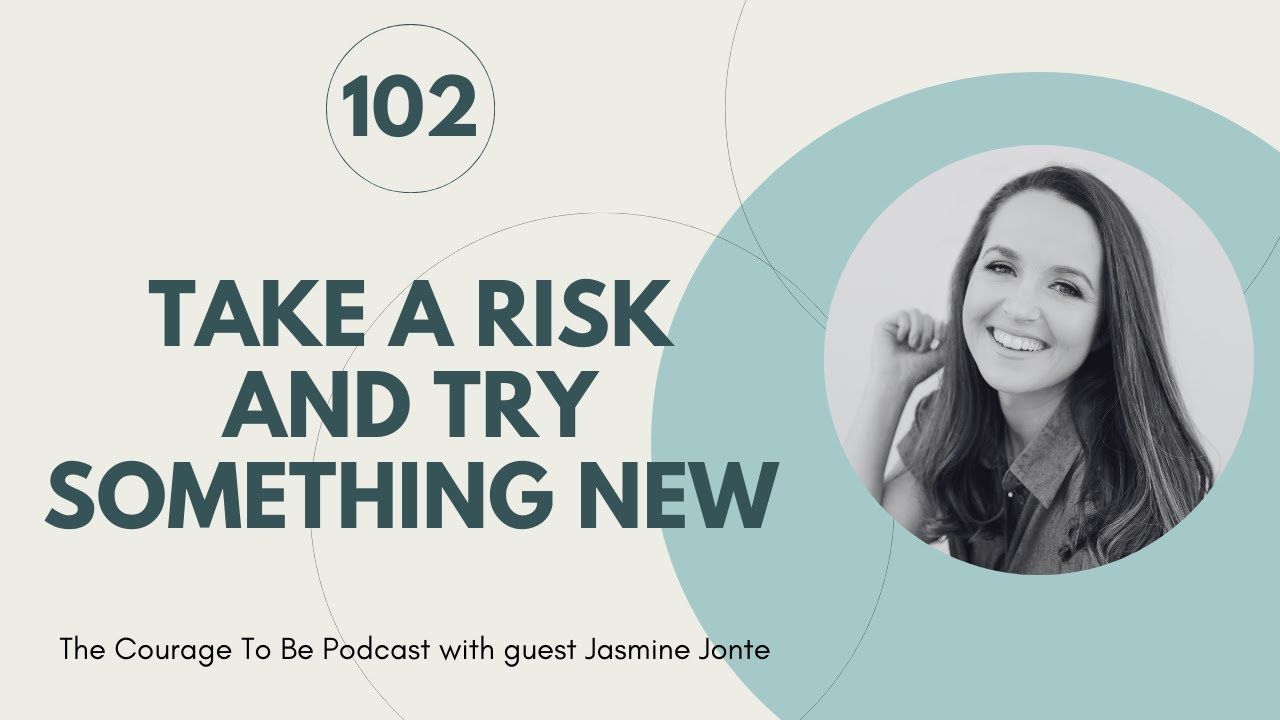
Before she ever built a course for a client, Jasmine Jonte ran her own mastermind with 87-88% retention — meaning nearly nine out of ten members re-enrolled, cycle after cycle. She didn't realize at the time that was unusual. She joined Tania Vasallo on The Courage to Be podcast to break down exactly what she was doing right — and it's a genuinely useful blueprint. Let's dig in. 🎯
Q: How do you know what should actually go inside your course content?
A: Jasmine's go-to exercise, one she returns to across nearly every conversation: imagine 10 of your ideal clients standing in front of you. Would at least 8 of them need this specific piece of content to get the transformation you're teaching?
The trap experts fall into is treating every powerful one-on-one moment as universally important — "that one thing I told that one client that one time and it changed everything" — when in reality, that insight may only be relevant to a small slice of your audience. 80% relevance is the bar for what belongs in the core training.
Q: Should teaching and coaching be kept as separate things?
A: Yes — and Jasmine's litmus test for whether your training content is doing its job is worth remembering: are you repeating yourself?
If you find yourself explaining the same foundational concept to multiple different people over and over in 1:1 or group calls, that's a signal it should be a training video, not live repetition. Once that core concept is captured well in training content, your actual live time with people — coaching calls, Q&A, consultations — can go deeper, addressing what's specific to each individual, because everyone already understands the foundational principles.
✅ The efficiency gain: you spend focused effort making one really good training video once, instead of re-explaining the same concept dozens of times live.
Q: What actually drives retention in high-ticket masterminds and memberships?
A: Jasmine points to connection between members, not just content quality — and she's blunt about her own experience in expensive masterminds: "The content is great, but we're in it because we get to see our friends three times a year."
For any offer that hinges on a group element — communities, masterminds, memberships — she recommends deliberately building what she calls "connective tissue" between members, separate from the training content itself. People buy for the transformation, but they stay for the community.
One concrete tactic she shared: create shared community language. Her own mastermind, Flight Club, calls its members "Flight Clubbies." It sounds small, even silly, from the outside — but once someone's identity becomes attached to being part of the group, leaving starts to feel like a real loss, not just a subscription cancellation. Some communities go as far as building an actual glossary of shared terms, creating genuine "insider" language that strengthens belonging.
Q: Where should mindset content actually live in a course?
A: Not at the beginning — and this is one of the more counterintuitive, useful insights in the conversation. Jasmine points out that most creators front-load all their "mindset" content into an early module and then move on, treating it as a one-time checkbox.
Her reframe, informed by classroom teaching: you don't just teach a kindergartner how to "be a good student" once in week one and never revisit it. The mindset support that actually matters most tends to be needed in the middle of a program, exactly where students are most likely to get stuck.
Her practical fix: instead of separating "mindset" into its own module, look at each individual topic in your training and ask what specific mindset hangup students will have with that exact piece of content — then weave the relevant mindset support directly into that lesson, rather than compartmentalizing it up front.
Q: What's the biggest teaching mistake you see in expert-led programs?
A: Making the program about the expert instead of the student. Jasmine borrows a concept from Donald Miller's StoryBrand framework: you're not the hero — you're the guide.
Building authority matters for getting someone to say yes in the first place. But once someone's already bought, that job is done — the content should shift almost entirely toward them. She specifically flags "about me" or origin-story videos placed at the start of a paid program as a common misstep — students already said yes; they don't need to be resold on the creator's credibility. Where storytelling does belong is in showcasing client stories — a much stronger motivator than the creator's own narrative, because it shows students a realistic version of their own potential outcome.
Q: What's the second biggest mistake?
A: Putting the full weight of getting results on the student, without doing the work to make that possible. Jasmine draws a clear line: it's the student's job to do the work — it's the teacher's job to make that work easy to do.
Simply including "all the training" isn't enough if it hasn't been evaluated through an instructional design lens: are there resources? Is there a clear path to ask questions? Is there real support built in? Her framing is pointed: students aren't just paying for what's in your brain — they're paying for the ease of applying it.
Q: You had 87-88% retention in your own mastermind before you started your agency. What made that work?
A: Jasmine identifies three factors working together, not any single silver bullet:
- Teaching skill — content that was clear, simple, and actionable, with actual result tracking built in, so members could see their own progress.
- Community — members stayed connected to each other, not just to Jasmine.
- A genuinely unique offer — at the time, she was serving what she calls "personal development junkies": people who attended tons of events, met tons of people, but went home and made no lasting changes. Her mastermind gave them a structured container to actually integrate what they'd learned — something they couldn't find anywhere else at the time.
⚠️ Worth noting — not every niche is built for high retention, and that's not necessarily a failure. Jasmine points to a program her team built around divorce and custody navigation: once someone's divorce is finalized, they simply don't need the program (or continued legal support) anymore. The transformation is complete, so continuity isn't the right goal for every offer.
The Bottom Line
Course success isn't just about content quality — it's the combination of clear, actionable teaching; genuine connection between members; and an offer that solves something people genuinely can't get elsewhere. Keep mindset support woven into the moments where students actually get stuck (usually the middle, not the start), make your program about the student rather than yourself once they've bought, and remember that your job isn't finished once the training is recorded — it's finished when the work is genuinely easy for someone to do.
Wondering what would actually make your program the kind people can't stop talking about? 🚀 Head to cre8tion.co to talk through your specific course.
Enjoyed this conversation? Subscribe to The Courage to Be for more powerful conversations on building a business — and a life — with courage.
Join Thousands of Course Creators + Get FREE Weekly Tips in your Inbox
The folks on my list get the goods, by which I mean... insider scoop on the biz, personal life updates, and first chances to join me in new opps. You're in good company. No spam, ever.
We hate SPAM. We will never sell your information, for any reason.
